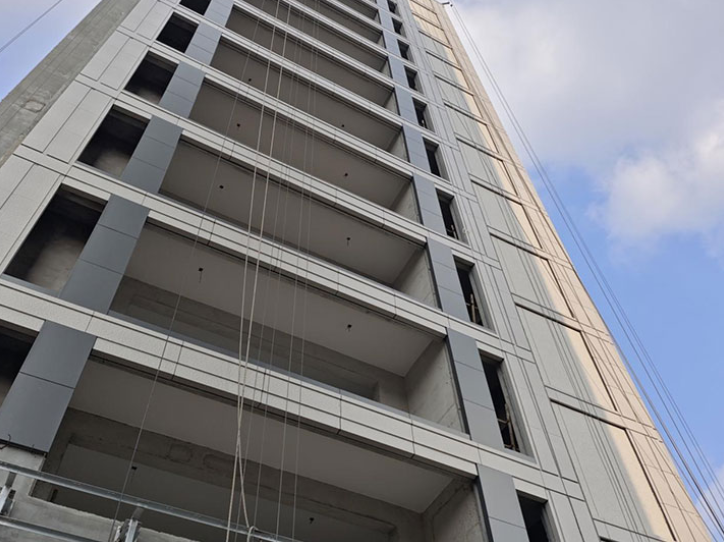
Aluminium composite panel cladding is a modern and widely used building material solution for both exterior and interior applications. It is manufactured by bonding two thin aluminium sheets to a durable non-aluminium core, creating a panel that is lightweight, strong, and highly resistant to weather and corrosion. Thanks to its durability and clean appearance, aluminium composite panel cladding is commonly used for building facades, curtain walls, interior partitions, signage, and architectural decoration projects.
The global demand for aluminium composite panel cladding continues to grow because of its long service life, easy installation, low maintenance requirements, and modern aesthetic appeal. In addition to its attractive finish, the material offers excellent flexibility and design versatility, making it suitable for a wide range of commercial, residential, and industrial projects.
· Aluminium composite panels are lightweight yet durable, offering excellent resistance to weather, moisture, and corrosion.
· These panels are easy to fabricate and install, helping reduce construction time and labor costs.
· Aluminium composite panel cladding is available in a wide range of colors, finishes, and surface textures to match different architectural styles.
· Many ACP panels provide strong fire-resistant performance and long-term durability with minimal maintenance.
· Aluminium composite panels are environmentally friendly because aluminium can be recycled repeatedly without losing quality.
· ACP cladding can be used for exterior facades, interior decoration, signage, renovation projects, ceiling systems, and even furniture applications, making it a highly versatile material choice.
Aluminium composite panels are designed to be both lightweight and durable. Each panel consists of two thin aluminium sheets bonded to a plastic core, creating a sandwich-like structure that offers strength while remaining flexible. Most manufacturers use 3000 or 5000 series aluminium alloys. The 3000 series contains manganese, which improves strength and formability, while the 5000 series contains magnesium for better corrosion resistance and hardness. The core material is typically made from polyethylene (PE), polypropylene (PP), or PVC. Core thickness usually ranges from 0.3 mm to 2 mm, while the aluminium sheets are commonly between 0.2 mm and 0.5 mm thick. Some aluminium composite panels also include mineral-filled cores to improve fire resistance. Different bonding technologies are used to strengthen the connection between the aluminium layers and the core material. While some panels use adhesive bonding, more advanced manufacturing methods use heat pressing or reinforced structures to improve durability and reduce the risk of delamination or moisture damage. The panel surface may also receive additional treatments such as anodizing, protective coating, or anti-corrosion finishing to improve weather resistance and extend service life. Tip: Always check the bonding quality of aluminium composite panel cladding. Strong layer adhesion helps improve safety, durability, and long-term performance. Aluminium composite panels offer a combination of practical and aesthetic advantages, making them widely used in modern construction projects. · Lightweight and easy to install, reducing structural load on buildings. · Strong resistance to impact, bending, and harsh weather conditions. · Excellent durability against sunlight, rain, moisture, and corrosion. · Good thermal and acoustic insulation performance, helping improve energy efficiency. · Recyclable and environmentally friendly materials. · Available in various colors, finishes, and surface designs for architectural flexibility. · Long-lasting performance with low maintenance requirements.Aluminium Composite Panel Cladding
Structure and Materials
Key Properties
You can see how aluminum composite panels perform in this table:
Property Tested | Test Method | Measured Value / Performance |
|---|---|---|
Thermal Resistance | ASTM C 518 | 0.071 m²·K/W |
Thermal Conductivity | – | 14.085 W/m²·K |
Heat Deflection Temperature | ASTM D 648 | Average value (not specified) |
Linear Thermal Expansion | ASTM D 696 | 2.4 mm/m per 100°C |
Tensile Strength | ASTM D 638 | 30 to 58 N/mm² |
0.2% Stress Proof | ASTM D 638 | 25 to 55 N/mm² |
Elongation | ASTM D 638 | Greater than 5% |
Flexural Strength | ASTM D 790 | 120 MPa |
Flexural Modulus | ASTM D 790 | Greater than 17,000 MPa |
Punch Shear Test | ASTM D 732 | 18 to 24 MPa |
Water Absorption | ASTM D 570 | Maximum 0.5% |
Peel Strength Test | ASTM D 903 | Up to 12.00 N/mm² at 180° angle |
Airborne Sound Transmission Loss | ASTM E 90 | 0.25 ± 0.05 dB |
Aluminium composite panel cladding can be used for both interior and exterior applications. The panels are designed for long-term durability and maintain their appearance for many years, even when exposed to changing weather conditions. Their smooth surface also makes them easy to clean, as dust and dirt do not easily accumulate. Combining strength, modern aesthetics, and environmental benefits, aluminium composite panels are an ideal solution for a wide range of architectural and construction projects.
Aluminum composite panels are built to last in different environments. They can resist rain, wind, sunlight, and moisture without losing performance or appearance. Tests show that the aluminum layer provides excellent resistance to water vapor, with a resistance factor of over 100,000. The panels also absorb very little water, with only around 3% water absorption after 8 days of testing. Fire testing has shown a UL-94 V1 rating, meaning the panels offer reliable fire performance in both horizontal and vertical applications. These panels also perform well in hot and humid conditions by reducing vapor penetration and helping prevent moisture buildup.
Note: These properties show that aluminium composite panels are durable and suitable for harsh weather conditions.
Aluminum composite panels are lightweight and easy to handle. Compared with many traditional cladding materials, they weigh much less while still maintaining high strength. Their lightweight structure makes transportation, handling, and installation faster and easier, helping reduce labor time and installation costs. At the same time, the panels remain strong, durable, and suitable for long-term use in different building applications.
Safety is an important consideration when choosing building materials. Many aluminum composite panels are manufactured to meet strict fire safety standards.
For example, some ACP panels achieve an A2-s1 d0 fire rating under the BS EN 13501-1:2018 standard.
This means the panels offer strong fire resistance and produce very low smoke levels during a fire. Because of these safety features, aluminum composite panels are widely used in commercial buildings, public spaces, and high-rise projects.
Aluminium composite panels offer excellent design flexibility for modern architecture and interior decoration. They are available in a wide range of colors, finishes, and textures to suit different project styles.
Architects and designers can choose from glossy, matte, metallic, wood grain, stone, or brushed finishes to create customized appearances. The panels also resist corrosion and maintain their appearance for many years.
This flexibility makes aluminium composite panels a popular choice for creative and long-lasting architectural designs.
Aluminium composite panels are widely used in modern construction and architectural projects. They are suitable for both interior and exterior applications because they are lightweight, durable, and available in many styles and finishes. Their versatility makes them a popular choice for a wide range of building and design applications.
Aluminium composite panels are commonly used for building facades, exterior wall cladding, curtain walls, and roofing systems. These panels help protect buildings from rain, wind, sunlight, and other harsh weather conditions while giving structures a modern and attractive appearance.
They are available in various colors and surface finishes, allowing architects and designers to create customized exterior designs. The panels also provide thermal insulation benefits, helping improve energy efficiency in residential, commercial, and industrial buildings.
Here is a table with some details about outside cladding systems:
Tested System | ACM Core Type and Thickness | Aluminium Facing Thickness | Air Gap Thickness (mm) | Insulant Type and Thickness |
|---|---|---|---|---|
System 1 | Polyethylene (PE) core, 3 mm | 0.5 mm (each side) | 50 | PIR (Celotex RS5000), 4 mm |
System 2 | Polyethylene (PE) core, 3 mm | 0.5 mm (each side) | 100 | Mineral Wool (Rockwool Duoslab), 4 mm |
System 3 | Limited combustibility A2 core | 0.5 mm (each side) | 50 | PIR (Celotex RS5000), 4 mm |
Tip: Aluminium composite panels are an excellent choice for exterior wall systems because they combine durability, weather resistance, and modern aesthetics.
Aluminium composite panels are also widely used for interior decoration and partition systems. They can be installed on interior walls, ceilings, column covers, and decorative surfaces in offices, hotels, shopping malls, and residential spaces.
Their smooth surface and wide range of colors and textures help create clean and modern interior designs. In addition, the panels are easy to clean and maintain, making them suitable for high-traffic areas.
They also help improve indoor comfort by providing sound insulation and a more refined appearance.
Aluminium composite panels are one of the most popular materials for signage and advertising applications. They are commonly used for billboards, display boards, shop signs, exhibition panels, and branding systems.
Because the panels are lightweight and easy to fabricate, they can be cut, bent, drilled, and shaped using standard tools. Their flat surface supports high-quality printing and painting, helping create bright and professional advertising displays.
The panels are also resistant to fading, scratching, and weather exposure, making them suitable for both indoor and outdoor signage.
· Easy to cut, bend, and fabricate
· Smooth and stable surface for printing
· Strong weather resistance for outdoor signs
· Long-lasting appearance with low maintenance
Aluminium composite panels are widely used in renovation and restoration projects. They can cover damaged or outdated building surfaces and give older structures a modern appearance without major structural changes.
Because the panels are lightweight, they can often be installed over existing surfaces, reducing construction time and renovation costs. Many schools, hospitals, offices, and public buildings use ACP cladding systems to improve appearance, energy efficiency, and safety performance.
Fire-retardant aluminium composite panels are also available for projects that require enhanced fire protection.
Note: Using aluminium composite panels in renovation projects can improve both the appearance and long-term value of a building.
Aluminium composite panels are increasingly used in modular kitchens and furniture manufacturing. The material is easy to process and fabricate, making it suitable for cabinets, shelves, countertops, wardrobes, and decorative furniture panels.
The panels are resistant to moisture, stains, and heat, making them especially practical for kitchen environments. They are also available in many colors, textures, and finishes, allowing homeowners and designers to create modern and customized interior spaces.
Furniture manufacturers value ACP panels because they are lightweight, durable, easy to clean, and maintain their appearance for many years.
Today, aluminium composite panels continue to gain popularity across construction, architecture, advertising, and interior design industries because of their durability, flexibility, attractive appearance, and easy installation.
When you choose cladding, you want it to last and look good. You also want your building to stay safe. Aluminum composite material is a top choice because it is lightweight, strong, and easy to install. Compared with other materials, aluminum composite material performs well in both appearance and functionality. It is easy to install and helps improve construction efficiency. It also provides a clean and modern look. Cladding Material Type Market Share (2023) Key Performance Attributes Aluminum Composite Panel (ACP) >50% Lightweight, durable, weather-resistant, fire-resistant, aesthetic appeal Polyethylene (PE) Cladding Panel ~20% Lightweight, flexible, easy to install Polyvinylidene Fluoride (PVDF) ~15% UV and chemical resistant, suited for harsh environments Fluoropolymer Resin (FEVE) ~10% Extremely durable, weather-resistant High-Pressure Laminate (HPL) ~5% Durable, scratch-resistant, used in high-traffic areas Aluminum composite material is widely used because of its stable performance and safety. New coatings such as PVDF help the panels last longer. They also improve weather resistance and help maintain color stability over time. These features also support energy efficiency. Fire-retardant cores and UV-resistant coatings help meet strict safety and energy requirements. You want to save money on your building. Aluminum composite material is cost-effective to install. It is lightweight and easy to move, so no special tools or heavy machines are needed. The panels do not rust or stain and are not easy to scratch. They require low maintenance and are easy to clean. The color stays bright for many years, which helps reduce maintenance and repair costs. Because of these advantages, more and more projects choose aluminum composite material for construction. Aspect Details Market Size (2024) USD 10.5 Billion Projected Market Size (2033) USD 15.2 Billion CAGR (2026-2033) 4.8% Application Share (2023) Building sector 60%, Industrial 20%, Marine & Railway 20% Technological Drivers Advanced coating technologies, improved durability, automation in manufacturing Why Choose Aluminum Composite Material
Comparison with Other Materials
Cost and Maintenance
You want to help the planet. Aluminum panels are an eco-friendly material. About 95% of these panels can be recycled. Recycling saves almost all the energy needed to produce new aluminum. This helps reduce pollution and supports green building goals. The panels remain strong after recycling, and there is no loss in quality.
Aspect | Evidence Detail |
|---|---|
Recycling Rate | Aluminium recycling rate assumed at 95% to account for collection and sorting losses |
Energy Savings | Recycling aluminium requires 95% less energy than producing new aluminium |
Material Integrity | Recycling does not alter aluminium’s material properties |
Environmental Impact | Aluminium panels show the lowest environmental impact during manufacturing and disposal compared to carbon fiber composites |
You get many advantages when using aluminium composite panels. These panels are durable, energy-efficient, and easy to maintain. They can be used for both interior and exterior applications.
· Aluminium composite panels are much lighter than traditional building materials, which helps make installation faster and easier.
· They are resistant to rust and have good fire resistance. They can also be recycled repeatedly without losing performance or quality.
· The panels have consistent thickness and a strong surface layer, which ensures long-term stability and reliable performance.
If you want your building to look modern and perform well, aluminium composite panel cladding is a good option. For best results, it is recommended to consult a professional to select the right solution for your project.
What makes aluminum composite panels different from solid aluminum sheets?
Aluminum composite panels have a plastic core between two thin aluminum sheets. This makes them lighter than solid aluminum sheets and easier to install. They also provide better insulation and are simple to work with.
Can you use aluminum composite panels in wet areas like bathrooms?
Yes, aluminum composite panels can be used in wet areas. They are moisture-resistant and do not rust. They are also easy to clean. However, proper edge sealing is important to prevent water from entering the core.
How do you clean and maintain aluminum composite panels?
Clean the panels with mild soap and water using a soft cloth or sponge. Avoid strong chemicals and abrasive cleaning tools. Regular cleaning helps keep the surface in good condition and maintains its appearance.
Are aluminum composite panels safe for homes and schools?
Yes, aluminum composite panels are safe when they meet fire and safety standards. Many products include fire-retardant cores, making them suitable for use in homes, schools, and office buildings.
Can you paint or print on aluminum composite panels?
Yes, aluminum composite panels can be painted or printed. Their smooth surface allows for clear and high-quality printing, which is why they are widely used for signage and display applications.


Comments
Please Join Us to post.
0